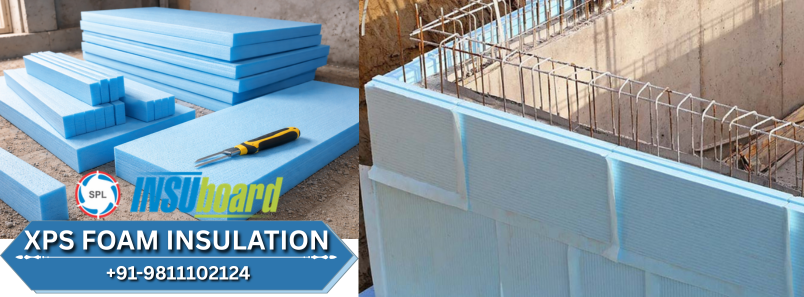
What is XPS Foam? Uses, Benefits & Applications of XPS Insulation Boards
XPS foam has become an essential insulation material in modern construction due to its excellent thermal performance, moisture resistance, and durability. Used in walls, roofs, floors, and foundations, XPS insulation boards help improve energy efficiency, reduce heat loss, and enhance the long-term performance of buildings...
Introduction
Strong insulation, durability, and moisture resistance are essential for modern construction projects. XPS foam insulation is one such material that has gained enormous popularity in the construction sector.
Because it helps maintain indoor temperature, increases energy efficiency, and shields structures from moisture damage, XPS foam is frequently used in residential, commercial, and industrial buildings. High-quality insulation solutions that enhance building performance and save energy are offered by businesses like XPS Board.
We will describe XPS foam in this blog, along with its characteristics, manufacturing process, and typical applications in building projects.
What is XPS Foam?
XPS foam (Extruded Polystyrene Foam) is a rigid insulation material made by melting polystyrene resin and pushing it through an extrusion process to create a dense foam board with a closed-cell structure.
Because of this manufacturing method, XPS foam has a smooth surface, uniform structure, and excellent thermal insulation performance. The closed-cell structure also makes it highly resistant to water absorption and moisture damage.
XPS boards are commonly used in construction projects to improve thermal insulation, energy efficiency, and structural durability.
How XPS Foam is Manufactured
The production of XPS foam involves a controlled extrusion process that creates its unique insulation properties.
1. Raw Material Preparation
Polystyrene crystals are mixed with additives and blowing agents that help create the foam structure.
2. Melting and Extrusion
The mixture is heated at high temperatures and forced through an extruder machine.
3. Foam Expansion
As the material exits the extrusion die, it expands into foam and forms a continuous sheet.
4. Cooling and Cutting
The foam sheet is cooled and cut into insulation boards of different thicknesses and sizes.
This process creates the closed-cell structure that gives XPS foam its high insulation performance.
Key Properties of XPS Foam
XPS foam boards offer several technical advantages that make them ideal for construction insulation.
Excellent Thermal Insulation
XPS foam has very low thermal conductivity, helping buildings retain heat in winter and stay cool in summer.
High Compressive Strength
The dense structure allows the boards to withstand heavy loads, making them suitable for floors, roofs, and foundations.
Moisture Resistance
The closed-cell design prevents water absorption and maintains insulation performance even in humid environments.
Lightweight and Easy Installation
XPS boards are lightweight and can be easily cut and installed during construction.
Long-Term Durability
The material resists corrosion, mold growth, and structural damage, ensuring a long service life.
Applications of XPS Foam Boards
XPS insulation boards are widely used in many construction and engineering applications.
Wall Insulation
XPS foam boards are commonly installed in external walls to improve building insulation and energy efficiency.
Roof Insulation
They help reduce heat transfer through roofs and improve indoor comfort.
Floor Insulation
Due to their high compressive strength, XPS boards can support heavy loads in flooring systems.
Basement and Foundation Insulation
Their moisture resistance makes them suitable for underground structures.
Cold Storage and Industrial Buildings
XPS foam is widely used in cold storage facilities and warehouses where temperature control is essential.
Advantages of Using XPS Insulation Boards
Using XPS foam insulation provides many benefits for construction projects.
- Improves building energy efficiency
- Reduces heating and cooling costs
- Provides strong moisture protection
- Offers long-lasting insulation performance
- Enhances structural durability
Because of these benefits, XPS foam boards are widely used in modern energy-efficient buildings.
Why XPS Foam is Important for Energy-Efficient Buildings
Energy conservation has become a major focus in modern construction. XPS foam insulation helps buildings reduce heat loss and maintain stable indoor temperatures.
With proper insulation systems, builders can improve thermal performance, reduce energy consumption, and create more sustainable structures.
High-quality insulation materials from manufacturers such as xpsboard.in are designed to meet these modern construction needs.
Conclusion
XPS foam is one of the most effective insulation materials used in construction today. Its closed-cell structure, strong compressive strength, moisture resistance, and excellent thermal insulation properties make it ideal for walls, roofs, floors, and foundations.
As the demand for energy-efficient and durable buildings continues to grow, XPS foam insulation boards will remain an essential material in modern construction projects.
Choosing high-quality insulation solutions ensures better energy efficiency, longer building life, and improved comfort in residential and commercial spaces.
FAQs
What is XPS foam used for?
XPS foam is mainly used for building insulation in walls, roofs, floors, and foundations to improve energy efficiency and temperature control.
Is XPS foam waterproof?
XPS foam has a closed-cell structure that makes it highly resistant to water absorption and moisture.
What is the difference between EPS and XPS foam?
EPS foam is made from expanded polystyrene beads, while XPS foam is produced through an extrusion process that creates a denser and stronger insulation board.
Is XPS foam good for insulation?
Yes, XPS foam offers excellent thermal insulation, durability, and moisture resistance, making it one of the most widely used insulation materials in construction.