Indian Thermal Wall Board Exporters: Products, Quality, and Global Demand

Shiv Sons
In today's world of the construction industry, energy efficiency, comfortable indoors, and robust materials are vital in the design and creation of structures. Find out how the use of thermal wall boards is so beneficial in construction.
For international buyers exploring Indian thermal wall board exporters, understanding product specifications, insulation performance, and supplier reliability is essential. The appropriate thermal wall board can minimize heat flow through walls, help maintain indoor temperature, and contribute to more energy-efficient buildings.
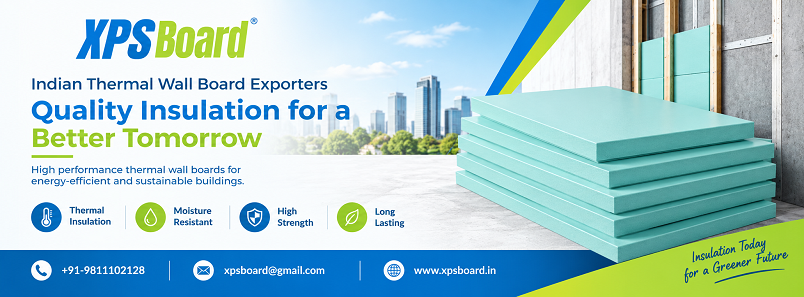
XPS Board, a division of Shiv Sons, offers INSUboard insulation products for wall, roof, and floor applications. With experience in the construction and insulation industry since 1991, the company provides insulation solutions for different building requirements. Buyers can explore the XPS Board product range to understand the available options.
What Are Thermal Wall Boards?
Thermal wall boards are insulation materials made to reduce heat transfer through building walls. They are used in homes, offices and industrial buildings to help keep temperatures comfortable and to make the building envelope more efficient.
One popular choice is Extruded Polystyrene or XPS, insulation board. These boards have a closed-cell structure that gives them thermal insulation, low water absorption and strong compressive strength. That makes them suitable, for types of construction work.
How well these boards perform depends on a things. The thickness of the board matters. The density also plays a role. So does the thermal conductivity, which shows how well the material stops heat from moving. The way the board is installed can affect performance too. Finally the specific needs of the building system must be considered.
Why Are Indian Thermal Wall Board Suppliers Important for Global Buyers?
India provides options for sourcing construction and insulation materials. International buyers can look at product details, pricing, supply conditions and shipping choices when checking suppliers.
Picking the right supplier is not just about cost. Buyers must check the suppliers role in the supply chain whether the product is, in stock if proper technical documents are available and if the supplier can meet all order needs.
Here are some important factors to consider.
1. Different Insulation Options
Construction projects have insulation needs. Wall insulation must deal with heat transfer, moisture, the space available for installation and how well it works with the wall system.
XPS Board provides INSUboard for walls, roofs and floors. Choosing the grade for the job is key, to getting the performance you need.
2. Technical Product Information
Product specifications help buyers compare insulation materials accurately. Important information might include conductivity, compressive strength, density, size, thickness and water absorption properties.
Ask for the data, for the specific product and grade instead of depending on general descriptions of XPS insulation.
3. Supply and Distribution Support
I know that for contractors, wholesalers and project buyers, product availability and delivery planning can influence construction schedules. Before placing an order make sure you know how units you need if the product is in stock, where the product will be delivered and when the product will leave the warehouse.
4. Application-Based Guidance
The best insulation board for your job depends on where and how you will put it in place. A wall-grade board might not be the choice for a heavy floor and a floor-grade board might be overkill for a simple wall. Talking with the supplier, about your project needs can help you pick the product.
Understanding XPS Thermal Wall Insulation Boards
XPS insulation boards are foam boards made using an extrusion process. These boards have a closed-cell structure that helps with insulation and keeps moisture from getting in. When chosen properly and put in place correctly XPS boards can reduce the amount of heat that moves through building walls. This can lead to consistent indoor temperatures and may lower the need for heating or cooling depending on how the building is designed and what the local climate is, like.
INSUboard wall-grade products listed by XPS Board are intended for applications such as:
- Exterior wall insulation.
- Interior wall insulation.
- Cavity wall insulation.
- External Insulation and Finish Systems (EIFS), where compatible with the specified system.
Before selecting a board, confirm that its technical characteristics and installation method are appropriate for the project.
Key Quality Factors to Check Before Buying Thermal Wall Boards
International buyers should evaluate insulation boards according to measurable specifications and intended use.
Thermal Conductivity
Thermal conductivity tells us how fast heat moves through a material. A lower number usually means insulation as long as the measurements are done in the same way. XPS Board lists a conductivity value of 0.0289 W/m·K for its INSUboard grades. Buyers should check the documents for the exact product they are looking at to be sure.
Compressive Strength
Compressive strength shows how well a material can handle pressure or crushing forces. This is especially important, for floor and roof uses. Even for wall boards the right strength level depends on how the material is installed. Select the grade that fits the needs and the installation method of your project.
Density and Thickness
Density and thickness are important product specifications, but neither should be evaluated in isolation. The appropriate combination depends on the required thermal performance, available space, installation details, and application.
Request the specifications for the exact board grade and thickness before placing a bulk order.
Moisture Resistance
Moisture resistance is an important consideration in building insulation. XPS boards have a closed-cell structure that helps limit water absorption, but the performance of the complete wall system also depends on waterproofing, drainage, joints, and installation quality.
Do not treat an insulation board as a replacement for a properly designed waterproofing system.
Dimensional Consistency
Consistent board dimensions can simplify installation and help reduce material waste. Buyers should confirm the specified length, width, thickness, and permitted tolerances.
Product Documentation
Request relevant technical data sheets, test reports, installation recommendations, and compliance documents where applicable. Any claimed certification should be verified for the specific product and destination market.
Applications of Thermal Wall Boards in Modern Construction
Thermal insulation boards can be used in several types of buildings, depending on the product grade and installation system.
Residential Buildings
In homes and apartments, wall insulation can help reduce unwanted heat transfer between indoor and outdoor spaces. This may improve comfort in regions with hot summers or cold winters.
Commercial Buildings
Offices, hotels, hospitals, educational facilities, and retail buildings may use wall insulation as part of a broader strategy to manage indoor temperatures and building energy consumption.
Industrial Facilities
Factories, warehouses, and other industrial buildings may require insulation to support indoor environmental conditions. The choice of board depends on operating temperatures, wall construction, moisture exposure, and relevant fire-safety requirements.
Renovation Projects
Insulation boards may also be considered when upgrading existing buildings. Before installation, assess the condition of the existing wall, available space, moisture movement, fixing method, and compatibility with the proposed insulation system.
Thermal Wall Boards for Export and International Supply
Buyers searching for Indian thermal wall board exporters should evaluate both the product and the supplier's ability to meet international order requirements.
Before purchasing, consider the following:
Product availability: Confirm whether the required grade, dimensions, and quantity are available.
Technical compliance: Check the product's suitability for the destination country's building regulations and project requirements.
Packaging: Ensure the boards are protected against damage during handling and transportation.
Shipping arrangements: Confirm lead times, freight responsibilities, delivery terms, and the receiving location.
Documentation: I suggest you clarify which commercial documents, shipping documents and technical documents will be supplied.
Landed cost: I recommend you compare the product price with transportation costs, insurance costs, customs duties and other applicable charges.
Not every Indian insulation supplier is necessarily an exporter. I advise buyers to confirm export capability, shipping arrangements and documentation directly with the supplier before placing an order.
Why Consider XPS Board for Insulation Requirements?
XPS Board provides access to INSUboard insulation products designed for wall, roof, and floor applications. The company operates under Shiv Sons, which states that it has been involved in the construction and insulation industry since 1991.
Its product range supports different insulation requirements, including wall insulation for residential, commercial, and industrial buildings.
When evaluating products from XPS Board, buyers should consider:
- The intended application of each board grade.
- Published thermal conductivity and compressive-strength specifications.
- Required board thickness and dimensions.
- Compatibility with the proposed installation system.
- Availability and delivery requirements.
- Technical guidance for product selection.
You can explore the wall insulation board range for more information about product applications and specifications.
How to Choose the Right Thermal Wall Board Supplier
A structured buying process can help contractors, distributors and project managers reduce procurement issues.
1. Define the application: Identify whether boards are required for walls, roofs, floors or another approved use.
2. Set technical requirements: Establish the required performance, strength, thickness and dimensions.
3. Request product documentation: Review the data, for the exact grade being offered.
4. Confirm supply capability: Check availability order quantities and delivery schedules.
5. Compare costs: Include transportation, installation requirements and potential material wastage.
6. Verify export requirements: For shipments confirm destination-market compliance and shipping documentation.
I have seen projects where the lowest quotation was not the economical choice. Boards that do not meet the specifications can create installation challenges or fail to meet the project’s performance requirements.
Final Thoughts
Indian thermal wall board suppliers give buyers chances to find insulation materials for homes, offices and factories. I know that choosing the product requires careful attention to thermal conductivity the pressure it can withstand its thickness, its water resistance and whether it fits the job.
If you are looking at XPS insulation XPS Board offers options for walls, roofs and floors. Reviewing the details that are shared and talking to the supplier, about what your project needs can help you choose better.
No matter whether you are building a place improving an old one or getting insulation materials for a large project picking the right XPS Board type and installation method is important to make sure the insulation works well.